
Table of Contents
- The Decision That Changes Life Very Quickly
- Understanding Hemodialysis and Peritoneal Dialysis
- Hemodialysis vs Peritoneal Dialysis: Key Differences at a Glance
- Why I Entered Hemodialysis Without Fully Understanding My Options
- The AV Fistula Decision That Affected Me Long After Transplant
- What Hemodialysis Really Felt Like
- What I Later Learned About Peritoneal Dialysis
- Hemodialysis vs Peritoneal Dialysis — The Real-World Differences
- Questions Every Patient Should Ask Before Choosing Dialysis
- How to Choose Between Hemodialysis and Peritoneal Dialysis
- What I Would Probably Do Differently Today
- When to Seek Medical Advice
- Frequently Asked Questions
- About the Author
- Medical Disclaimer
- Conclusion
The Decision That Changes Life Very Quickly
One of the hardest realities of kidney failure is how rapidly dialysis decisions sometimes happen. Many patients are informed that their kidneys are failing while already physically weak, emotionally overwhelmed, and mentally frightened. In that condition, people often agree to major procedures without fully understanding how those decisions may affect their future lives. That was very close to my own experience.
My experience with dialysis was ultimately part of a much longer journey that eventually led to kidney transplantation, which I describe in My Kidney Transplant Journey: From Diagnosis to Transplant and Life After.
I had studied dialysis academically years earlier as a veterinarian, but I never imagined becoming a dialysis patient myself. When I was diagnosed with end-stage renal disease (ESRD), events moved quickly: emergency hospitalization, severe weakness, urgent dialysis discussions, vascular access planning, and long-term uncertainty all arrived almost at once.
Looking back now after transplant, I believe many patients do not receive balanced education early enough regarding both hemodialysis and peritoneal dialysis. Instead, they are often guided toward whatever system is already dominant or more available around them.
This article is not against hemodialysis. Hemodialysis saved my life and kept me stable until transplant. But I also believe patients deserve deeper, calmer, and more informed discussions before permanent dialysis decisions are made.
Understanding Hemodialysis and Peritoneal Dialysis
What Is Hemodialysis?
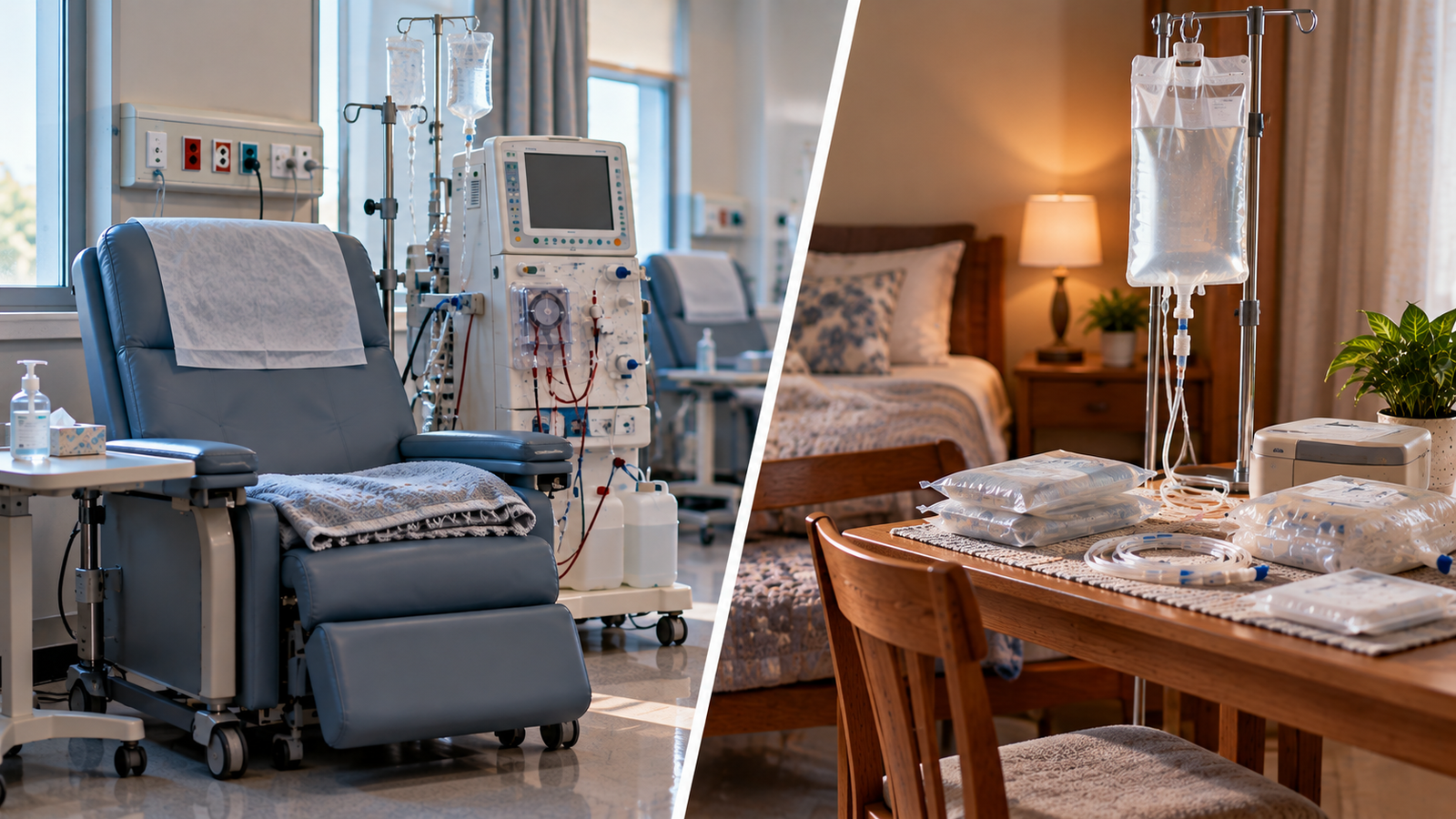
Hemodialysis (HD) uses a machine and an artificial filter to clean the blood outside the body. Blood is removed through vascular access, filtered through a dialyzer, and returned to the body.
For conventional in-center hemodialysis, treatment is commonly performed about three times a week for roughly four hours, although schedules vary and home hemodialysis can be prescribed differently.
This article mainly compares conventional in-center hemodialysis with peritoneal dialysis; home hemodialysis is another option that should also be discussed with a dialysis team. For a deeper understanding of dialysis fatigue and daily restrictions, see Dialysis Before Transplant: What It Really Feels Like.
What Is Peritoneal Dialysis?
Peritoneal dialysis (PD) works differently. Instead of using an external filter, it uses the abdominal lining (peritoneum) as a natural filtering membrane.
A catheter is placed into the abdomen, and dialysis fluid exchanges occur regularly, often at home. Some patients perform exchanges manually during the day, while others use automated overnight machines.
Compared with hemodialysis, PD may offer:
- More scheduling flexibility
- Greater independence
- Fewer large fluid shifts
- Less hospital dependency
- May help preserve remaining kidney function in some patients
Yet many patients receive very little detailed education about it before dialysis begins.
Hemodialysis vs Peritoneal Dialysis: Key Differences at a Glance
| Factor | Hemodialysis | Peritoneal Dialysis |
| Where treatment happens | Usually dialysis center; can also be done at home | Usually at home or another suitable clean environment |
| How it works | Blood is filtered through a dialyzer outside the body | The peritoneal lining filters blood inside the body |
| Typical schedule | In-center HD is commonly about 3 times weekly | PD is performed every day, using manual or automated exchanges |
| Vascular access | AV fistula, graft or catheter | Abdominal catheter |
| Needles | Repeated needle access is usually required for conventional HD | No repeated dialysis needles |
| Independence | More dependent on center schedule with in-center HD | Greater flexibility for many patients, but more self-management |
| Home responsibilities | Lower with in-center HD | Higher: exchanges, hygiene and supplies |
| Main infection concern | Vascular access/catheter-related infection | Peritonitis and catheter-related infection |
| Travel considerations | Requires access to a dialysis center unless using home HD | Supplies and treatment planning are required |
| Best choice | Depends on medical factors, lifestyle and preference | Depends on medical factors, lifestyle and preference |
Why I Entered Hemodialysis Without Fully Understanding My Options
In my case, dialysis started during a period of fear, severe weakness, and emotional shock. Everything felt urgent. I was quickly directed toward hemodialysis and AV fistula surgery without deeply understanding the long-term consequences.
At that time, I did not fully understand:
- Differences between HD and PD lifestyles
- Long-term vascular access implications
- The importance of preserving wrist veins
- The significance of surgeon selection
- Possible complications from fistula placement
Looking back honestly, I now believe many patients make dialysis decisions while psychologically exhausted and medically intimidated. That makes true informed consent difficult.
I also do not remember receiving a detailed, balanced comparison between hemodialysis and peritoneal dialysis in practical everyday terms. Had I understood PD more clearly then, I might have seriously considered it.
The AV Fistula Decision That Affected Me Long After Transplant
One of the biggest lessons I learned concerns vascular access planning.
Because emergency IV lines had already inflamed and damaged veins near my wrist during hospitalization, my AV fistula was ultimately created near the left elbow instead of the wrist. At the time, I lacked the knowledge to question the long-term consequences properly. That decision affected me years later.
Even after transplant, I developed:
- Bulging veins
- Arm discomfort
- Numbness
- Circulatory concerns
- Heart-related symptoms that I was later concerned could have been influenced by high-flow AVF physiology
My experience eventually led to another surgery two years after transplant, which I describe in The AV Fistula Closure Surgery — Closing a Chapter After Kidney Transplant, because the symptoms became increasingly difficult physically and psychologically.
Looking back now, I believe several mistakes occurred:
- My wrist access site was permanently lost
- I chose the wrong vascular surgeon
- I lacked proper dialysis education
- Emergency circumstances pushed rushed decisions
- Long-term vascular strategy was not discussed clearly enough
My experience should not be interpreted as meaning that AV fistulas are generally a poor choice. For many patients on hemodialysis, an arteriovenous fistula is an important and preferred form of vascular access. My lesson was about planning, preservation of vascular sites, informed decision-making and understanding potential long-term consequences—not about avoiding fistulas altogether.
What Hemodialysis Really Felt Like
1. The Physical Burden
Hemodialysis was far more exhausting than I had imagined academically.
The large needles inserted repeatedly into the AV fistula were painful, especially early on. Sitting attached to a machine for hours multiple times weekly slowly changes how you experience time, energy, work, and freedom.
I also experienced:
- Severe fatigue
- Weakness
- Mental fog
- Fluid restriction stress
- Emotional exhaustion
- Recovery fatigue after sessions
Fluid restriction became psychologically draining. Before kidney failure, nobody thinks about every sip of water. On dialysis, fluid becomes something you constantly calculate.
I discussed this struggle further in Dialysis Before Transplant: What It Really Feels Like.
2. The Psychological Burden
The mental impact of dialysis is often underestimated. Many patients appear calm externally while internally carrying anxiety, uncertainty, frustration, and emotional fatigue.
Dialysis can create a persistent feeling of dependency. Life becomes structured around hospital schedules, transport, blood tests, restrictions, and treatment sessions.
For me, one of the hardest parts was the gradual loss of spontaneity. Even small plans had to be evaluated around dialysis timing and physical energy.
One of the most emotionally devastating moments during my dialysis journey came when Hepatitis C infection was discovered just two days before my scheduled kidney transplant admission—which my treating team considered most likely to have been acquired during the hemodialysis period—which delayed my transplant for weeks, triggered intense panic inside my family, and eventually required a three-month antiviral treatment course after transplant surgery.
3. The Loss of Independence
This may be one of the most important differences that patients underestimate before selecting a dialysis modality.
Hemodialysis often ties life closely to:
- Dialysis centers
- Hospital systems
- Fixed schedules
- Staff availability
- Transportation logistics
Peritoneal dialysis, while carrying its own responsibilities, may provide some patients with greater autonomy and flexibility.
That psychological difference matters more than many people realize initially.
What I Later Learned About Peritoneal Dialysis
After transplant, I researched dialysis modalities more deeply with a calmer and more reflective mindset. The more I learned about peritoneal dialysis, the more I wondered whether it might have suited my personality and lifestyle better at that stage of my life.
PD is not a simple or risk-free alternative. It requires careful hygiene, regular treatment, supplies, training, and the ability to manage dialysis at home. Peritonitis and catheter-related problems are important concerns.
At the same time, PD can offer home-based treatment, greater scheduling flexibility, and freedom from repeated dialysis-center visits and conventional dialysis needles.
Looking back, I wish I had received a balanced explanation of both realities before my own dialysis decisions were made.
Hemodialysis vs Peritoneal Dialysis — The Real-World Differences
1. Lifestyle and Freedom
In-center hemodialysis can structure life around fixed treatment schedules, transportation, and dialysis-center visits. Missing or shortening treatments can be dangerous.
Peritoneal dialysis is performed at home and may provide greater scheduling flexibility, although that flexibility comes with more responsibility for the patient and family.
2. Fluid and Diet Restrictions
HD and PD can have different fluid and dietary requirements, but neither means having no restrictions. Requirements depend on factors such as residual kidney function, dialysis prescription, laboratory results, urine output, medications, and other health conditions.
3. Hospital and Home Responsibility
With in-center HD, much of the treatment is performed by the dialysis team. PD shifts more responsibility toward the patient and family, including treatment technique, hygiene, supplies, and recognizing possible complications.
4. Infection Risk
Both hemodialysis and peritoneal dialysis carry infection risks, but the types of infections and how they occur are different.
With hemodialysis, infections can involve the vascular access, particularly when a dialysis catheter is used. AV fistulas generally have a lower infection risk than dialysis catheters, but infection can still occur.
With peritoneal dialysis, the main infection concern is **peritonitis**, which can occur when bacteria enter the peritoneal cavity, often through contamination of the catheter or during treatment. Exit-site and tunnel infections can also occur.
Neither dialysis method is completely free of infection risk. Careful hygiene, proper technique, regular monitoring, and prompt attention to warning signs are important with both approaches.
5. Emotional and Mental Impact
Some patients feel more comfortable with the structure and supervision of a dialysis center. Others value the independence of home treatment.
There is no universally perfect choice. The best decision is usually individualized, medically appropriate, informed, and realistic.
Questions Every Patient Should Ask Before Choosing Dialysis
Before choosing a dialysis modality or permanent access, patients should ask:
- Am I medically suitable for both HD and PD?
- What are the long-term consequences of each option and its access?
- How will dialysis affect my daily life, work, travel, and mental health?
- What complications should I understand before starting?
- What vascular sites should be preserved if HD is chosen?
- What home support and training would I need for PD or home HD?
- If I start one modality, can I change to another later if my circumstances change?
A good dialysis decision should involve more than simply asking where treatment is available. Patients should understand the medical, practical, and long-term consequences of each option.
How to Choose Between Hemodialysis and Peritoneal Dialysis
Choosing between hemodialysis and peritoneal dialysis is not simply a question of which treatment is “better.” The right choice depends on whether each option is medically suitable for you and how well it fits your daily life, home circumstances, support system, and personal preferences.
Before making a decision, I would want answers to five practical questions:
- Is each modality medically suitable for me?
- Where do I want treatment to happen, and how will that fit my daily routine?
- How much responsibility am I comfortable managing myself?
- How will dialysis affect my work, family life, travel, and personal freedom?
- What access, home setup, training, and support will I need?
These questions can make the discussion with your nephrologist and dialysis team much more meaningful.
The goal is not to find the universally best dialysis modality. The goal is to find the modality that is medically appropriate and fits your circumstances, priorities, and ability to manage treatment.
What I Would Probably Do Differently Today
If I could revisit that period with my current knowledge, I would:
- Seek earlier dialysis education
- Research PD much more seriously
- Protect vascular access strategically
- Choose vascular surgeon more carefully
- Think longer-term rather than only urgently
- Ask harder questions
This reflection is not bitterness. It is experience.
When to Seek Medical Advice
Seek urgent medical attention for:
- chest pain
- severe shortness of breath
- severe weakness/fainting
- significant bleeding from dialysis access
- severe abdominal pain or other concerning symptoms while on PD
Contact your dialysis team promptly for:
- access-site redness, warmth, swelling or drainage
- persistent numbness or circulation changes
- fever or other signs of infection
- new or worsening symptoms
Patients considering dialysis should request formal education regarding all available modalities before permanent access procedures whenever possible.
Frequently Asked Questions
Is peritoneal dialysis better than hemodialysis?
Neither peritoneal dialysis nor hemodialysis is universally better. Both can provide effective kidney replacement therapy, but the better choice depends on medical suitability, lifestyle, home circumstances, support, and personal preference.
Hemodialysis may suit people who prefer treatment mainly managed by a dialysis center, while peritoneal dialysis may offer greater home-based flexibility. Your health and circumstances can also change over time.
The best question is not simply “Which is better?” but “Which option is medically appropriate and fits my life and priorities?” This decision should be made with your nephrologist and dialysis team.
Why are many patients started on hemodialysis first?
Sometimes because hemodialysis is more readily available, particularly when dialysis needs to begin urgently during a hospital admission or other acute situation. In some cases, a permanent vascular access such as an AV fistula may not yet be ready, so a temporary dialysis catheter is used.
Can AV fistulas create long-term complications?
Yes. Although AV fistulas are generally considered the preferred long-term vascular access for hemodialysis, complications can occur. These may include aneurysm or pseudoaneurysm formation, infection, bleeding, hand ischemia or numbness, and problems related to excessive blood flow in some patients.
Does peritoneal dialysis offer more freedom?
For many patients, yes. PD can provide greater flexibility and allow treatment at home, which may make it easier to maintain work, family, and daily activities. However, it also requires consistent self-management, appropriate home conditions, and adherence to infection-prevention practices.
About the Author
Dr. Salman is a veterinarian (DVM, M.Phil.) and kidney transplant recipient who underwent transplant surgery in August 2023. Through Renal Renewal, he writes about dialysis realities, kidney transplant recovery, immunosuppressant management, hydration, mental health, and long-term graft care using lived experience combined with medically responsible education. He is not a human medical doctor or nephrologist.
Medical Disclaimer
This article is based on personal experience and educational information and should not replace professional medical advice, diagnosis, or treatment. Dialysis decisions are highly individualized and should always be discussed with qualified nephrologists and healthcare professionals familiar with your medical condition.
Conclusion
Choosing a dialysis modality is not only a medical decision. It is also a psychological, lifestyle, and long-term strategic decision. Patients deserve more than rushed explanations during moments of fear and exhaustion. They deserve balanced education, realistic discussions, and enough clarity to understand how each pathway may shape ordinary life.
Hemodialysis kept me alive until transplant, and I remain grateful for that. But experience also taught me that survival alone is not the only issue patients should consider. Independence, vascular preservation, emotional burden, flexibility, and quality of life matter deeply too.
Looking back now, I understand how easily frightened patients move through dialysis decisions without fully understanding long-term consequences. That is why informed preparation matters so much. Patients may not control the fact that dialysis becomes necessary, but they should still be empowered to understand the road ahead before major decisions are made.