

Table of Contents
- The Shock of Kidney Failure
- My Kidney Transplant Journey at a Glance
- My ESRD Diagnosis: Facing Kidney Failure
- The Dialysis Chapter: Living Between Survival and Limitation
- The Turning Point: Choosing a Kidney Transplant
- The Night Before Transplant
- My Kidney Transplant Surgery: A Critical Transition
- Waking Up After Kidney Transplant Surgery
- Life After Transplant: A Different Kind of Responsibility
- What Changed After My Kidney Transplant?
- What I Wish I Had Known Before My Kidney Transplant
- Frequently Asked Questions
- Continue Your Kidney Transplant Journey
- Conclusion: Building a New Life After Transplant
- About the Author
- Medical Disclaimer
The Shock of Kidney Failure
This is my kidney transplant journey—from being diagnosed with end-stage renal disease (ESRD), through hemodialysis and transplant evaluation, to receiving a living-donor kidney transplant and learning what life after a kidney transplant is really like.
I was in my early thirties when kidney failure suddenly changed the direction of my life. Until that point, I was working, raising my young family, and planning for the future. Then, in May 2023, I heard the words “end-stage renal disease.”
Everything became quiet.
My mind refused to process what I had just heard. A cold sensation spread through my chest, and for a few moments it felt as if every plan I had for the future had disappeared. When the word “dialysis” followed, it cast a shadow over everything that came after.
What followed was a journey I could never have understood by reading about transplantation alone: the physical and mental burden of dialysis, living with an AV fistula, deciding to pursue transplantation, going through evaluation and preparation, receiving my brother’s kidney as a living donor, undergoing transplant surgery, and adapting to life with a transplanted kidney.
I am sharing this journey because I remember how isolating that first diagnosis felt. If you have recently been told that you have advanced kidney disease, are starting dialysis, or are beginning to consider kidney transplantation, I hope my experience gives you a clearer picture of what the journey can look like.
My experience is personal, not a prediction of what another patient will experience. Kidney disease, dialysis, transplant eligibility, surgery, and recovery vary from person to person, so medical decisions should always be made with your own nephrologist and transplant team.
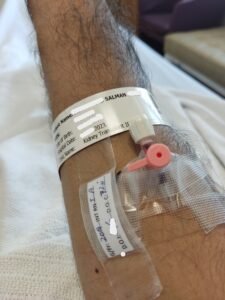
My Kidney Transplant Journey at a Glance
Here are the major milestones of my kidney transplant journey:
May 2023 — Diagnosis: Diagnosed with end-stage renal disease (ESRD).
Before transplant — Dialysis: Underwent hemodialysis while preparing for transplantation.
Transplant preparation: Completed transplant evaluation and preparation for surgery.
Living donor: My brother volunteered to donate a kidney.
August 2023 — Transplant: Received a living-donor kidney transplant at Pakistan Kidney and Liver Institute & Research Center (PKLI&RC), Lahore.
After transplant: Began lifelong immunosuppressive therapy and regular transplant follow-up.
Recovery: Gradually rebuilt physical strength and adapted to life with a transplanted kidney.
My experience is specific to me. The timing, treatment pathway, transplant eligibility, donor process, surgery, and recovery can be very different for other patients.
My ESRD Diagnosis: Facing Kidney Failure
Looking back, the warning signs were present long before the diagnosis. I was often tired, my appetite had changed, and my energy levels were steadily declining. At the time, I blamed stress, work, and academic commitments rather than considering the possibility of serious kidney disease.
Like many patients, I underestimated how effectively the body can compensate until it finally reaches its limit. Kidney disease often progresses quietly, which makes it easy to dismiss symptoms until they become impossible to ignore.
When I eventually collapsed and was taken for medical evaluation, that compensation had reached its breaking point.
The diagnosis of ESRD did not feel like information. It felt like a loss of control. The question that repeatedly ran through my mind was simple: why is this happening? At the time, I was not really searching for a medical explanation. I was searching for something that would make the situation feel predictable again.
The Dialysis Chapter: Living Between Survival and Limitation
Dialysis began as a life-saving treatment. For me, life on dialysis before transplant was defined by a constant balance between staying medically stable and trying to maintain some sense of normal life. Treatment days affected my energy, schedule, family plans, and ability to think beyond the immediate future. Over time, however, it became the framework around which the rest of life had to be organized.
The schedule was fixed. Family plans, work responsibilities, travel, and personal commitments all had to adapt around treatment sessions. I gradually stopped thinking in terms of weeks and months and started thinking in terms of dialysis days and recovery days.
That shift is difficult to explain unless you have experienced it. Dialysis keeps you alive, but it also creates a constant awareness that your freedom is limited by a machine and a schedule.
Readers interested in that experience can learn more in Dialysis Before Transplant: What It Really Feels Like and Hemodialysis Over Peritoneal Dialysis: What I Learned from Hemodialysis.
The Reality of the AV Fistula
My dialysis access created another challenge. Because of previous vascular issues, my AV fistula had to be placed at the elbow rather than the wrist.
Over time, it caused discomfort, pain, coldness, and reduced function in my arm. Even after transplantation, some of these effects persisted longer than I expected. Eventually, the fistula enlarged beyond safe limits and required closure surgery. That experience became an unexpected part of my kidney transplant journey because dialysis access did not simply become irrelevant when the transplant was completed.
That experience reminded me that even beneficial treatments can leave lasting effects that continue long after the original problem has been solved.
For more on that chapter, see The AV Fistula Closure Surgery — Closing a Chapter After Kidney Transplant.
The Physical and Mental Burden of Dialysis
The physical burden of dialysis is easier to recognize. Fatigue often extends beyond treatment sessions and affects concentration, productivity, and daily activities.
The mental burden is harder to see. Even when you are not connected to the dialysis machine, the next session is always approaching. That constant awareness creates a background pressure that gradually affects motivation, mood, and independence.
The Turning Point: Choosing a Kidney Transplant
Choosing a transplant was not a single decision. It was a gradual realization that dialysis was helping me survive but was not helping me move forward.
As months passed, the distinction became clearer. I was maintaining stability, but I was not rebuilding the life I wanted.
When my brother stepped forward as a donor, everything changed. My transplant was a living-donor kidney transplant, and knowing that the donor was my own brother added an emotional dimension to the experience that I could never separate from the medical side of transplantation. His willingness to undergo surgery for my benefit remains one of the most meaningful acts of generosity I have ever experienced.
At the same time, accepting a living donor transplant introduced a new responsibility. The decision was no longer only about my health. It also carried the weight of protecting a gift that someone I loved was willing to make.
The Night Before Transplant
The night before surgery felt different from every other night that came before it.
After months of uncertainty, evaluations, testing, and preparation, the process had finally become real. The NPO sign placed outside my hospital room door was simple, but it carried enormous meaning. It represented the final step before the operation that had the potential to change everything.
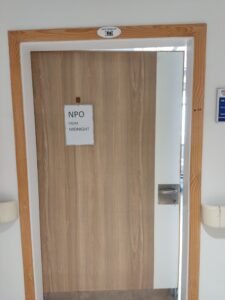
Sleep did not come easily. My thoughts moved constantly between hope and uncertainty. I thought about my donor brother. I thought about my family. I thought about all the things that could go right and all the things that could go wrong.
By morning, I was no longer focused on the waiting. I simply wanted the next chapter to begin.
My Kidney Transplant Surgery: A Critical Transition
Eventually, after completing the necessary preparation and receiving clearance, my living-donor kidney transplant was scheduled at the Pakistan Kidney and Liver Institute & Research Center (PKLI&RC), Lahore.
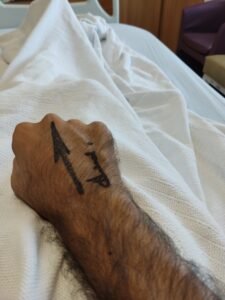
One detail I still remember clearly was the surgeon marking and signing my hand before the procedure. It was a routine part of surgical preparation, but it made the operation feel immediate and unavoidable. After months of planning, there was no longer any distance between preparation and action.
Surgery is often viewed as the destination in a transplant journey. Looking back, I see it differently. Surgery was a transition point rather than an endpoint.
Waking Up After Kidney Transplant Surgery
When I woke up after surgery, the first thing I noticed was not excitement. It was awareness.
The operation was over.
I was tired, uncomfortable, and surrounded by the normal sights and sounds of postoperative care. Yet beneath all of that was a realization that something fundamental had changed.
One of the earliest differences I noticed was the absence of the familiar dialysis-related fatigue that had shaped my life for months. Recovery from surgery brought its own challenges, but it felt different from dialysis.
At the same time, I quickly realized that the transplant had not removed responsibility. It had changed its form. Before transplant, survival depended on dialysis sessions. After transplant, stability would depend on medications, monitoring, follow-ups, and long-term discipline.

Readers interested in this phase can continue with Kidney Transplant Recovery: The First Weeks After Surgery.
Life After Transplant: A Different Kind of Responsibility
Life after transplant introduced a quieter form of responsibility.
Medications became permanent. Monitoring became routine. Hydration, hygiene, and consistency became essential parts of protecting the transplanted kidney.
Initially, these responsibilities felt overwhelming. Over time, they became integrated into daily life. What once required constant conscious effort gradually became a habit.
What Changed After My Kidney Transplant?
A kidney transplant changed my life in ways that were both obvious and surprisingly subtle.
The most obvious change was that dialysis was no longer organizing my week. I no longer had to plan my life around dialysis sessions, and I gradually regained freedom that had been difficult to imagine while living with kidney failure.
But transplantation did not mean that my health responsibilities disappeared. They changed.
Instead of dialysis sessions, I now had medications to take consistently, laboratory tests to monitor kidney function and medication levels, regular transplant follow-ups, and new precautions related to immunosuppression.
I gradually learned that these medications were not simply a short-term part of recovery but a permanent part of protecting the transplanted kidney. I explain that experience in Kidney Transplant Medications: My Daily Reality and What to Expect.
The psychological transition also took time. After spending months thinking primarily about surviving kidney failure and reaching transplantation, I had to learn how to think about protecting the kidney I had received.
That is one of the most important lessons from my transplant journey: transplantation is not the end of kidney disease management. It is the beginning of a different phase of life that requires long-term attention and consistency.
What I Wish I Had Known Before My Kidney Transplant
Looking back, there are several things I wish I had understood before my kidney transplant.
1. Recovery Does Not Begin and End With Surgery
I initially thought of transplant surgery as the major destination. I later realized that surgery was only the transition between two very different phases of life.
2. Dialysis Effects Do Not Disappear Overnight
A successful transplant can restore kidney function, but months or years of illness, dialysis, reduced activity, muscle loss, and psychological stress may take much longer to recover from.
3. Normal Laboratory Results Do Not Always Mean You Feel Normal
One of the most confusing parts of recovery was the gap between improving laboratory results and how I actually felt physically and mentally. Recovery is not always linear.
4. Transplant Life Requires Consistency
Medication timing, follow-up appointments, laboratory monitoring, hydration, nutrition, infection precautions, and other daily habits become part of protecting the transplanted kidney.
5. The Emotional Recovery Takes Time Too
Receiving a transplant can bring enormous relief, but it can also introduce new fears and responsibilities. Learning to live with that uncertainty was part of my recovery too.
I also experienced a form of physical and mental fatigue that I did not fully understand immediately after transplant. I wrote about that experience in Fatigue After Kidney Transplant: Is It Normal?, including how dialysis-related deconditioning, surgery, medications, and psychological recovery affected my energy.
Frequently Asked Questions
How long does the kidney transplant process take?
The timeline varies considerably. Depending on diagnosis, dialysis requirements, donor availability, and recovery, the process may take months or several years.
Do you have to be on dialysis before a kidney transplant?
No. Some patients receive pre-emptive transplants before dialysis becomes necessary, although many undergo dialysis before transplantation.
What is the hardest part of a kidney transplant journey?
The answer varies by individual. For some patients, dialysis is the most challenging stage. For others, the long-term responsibility of transplant life presents the greatest adjustment.
Does life go back to normal after a kidney transplant?
Life often becomes more stable, but it is usually a different version of normal. Ongoing medications, monitoring, and healthy habits remain important parts of daily life.
What is recovery like after a kidney transplant?
Recovery varies from person to person, but the early weeks commonly involve healing from surgery, frequent medical monitoring, medication adjustments, gradual return to physical activity, and adaptation to life with immunosuppressive medicines. Physical and emotional recovery can continue for months even when kidney function and laboratory results are improving.
What is a living-donor kidney transplant?
A living-donor kidney transplant is a transplant in which a healthy person donates one kidney to another person. In my case, my brother was my living donor. Living donation involves a separate medical evaluation and surgical process for the donor, so it is a major decision for both people involved.
Continue Your Kidney Transplant Journey
If you are reading this because you are somewhere along the same path, these articles may help you explore the next stage in more detail:
- Before Transplant: Signs You May Need a Kidney Transplant
- Transplant Evaluation: What Patients Go Through Before Kidney Transplant
- Dialysis: Dialysis Before Transplant: What It Really Feels Like
- Early Recovery: Kidney Transplant Recovery: The First Weeks After Surgery
- Recovery Timeline: Kidney Transplant Recovery Timeline: What Really Happens Week by Week
- Medications: Kidney Transplant Medications: My Daily Reality and What to Expect
- Long-Term Life: Living with Immunosuppressants: A New Normal for Kidney Transplant Recipients
- Fatigue: Fatigue After Kidney Transplant: Is It Normal?
- Side Effects Management: Managing Immunosuppressant Side Effects After Kidney Transplant
Conclusion: Building a New Life After Transplant
My kidney transplant journey is not defined by a single event. It is defined by a series of stages that gradually moved me from uncertainty toward stability.
What changed over time was not the complexity of the situation. What changed was my ability to understand it, adapt to it, and manage it more effectively.
The transplant did not return me to my previous life. Instead, it gave me the opportunity to build a sustainable new one. That process continues today through small decisions, consistent habits, and ongoing respect for the gift I received.
Resilience, I have learned, is rarely dramatic. More often, it is found in ordinary actions repeated consistently over time.
About the Author
Dr. Salman is a veterinarian (DVM, M.Phil.) and kidney transplant recipient who underwent living-donor kidney transplantation in August 2023.
Through RenalRenewal.com, he combines his scientific training with lived experience as a transplant recipient to write about kidney disease, dialysis, transplant surgery, recovery, immunosuppressants, hydration, nutrition, fatigue, and long-term life after transplantation.
He is not a human medical doctor or nephrologist. His articles distinguish personal experience from general medical information and are intended for education rather than diagnosis or treatment.
Medical Disclaimer
This article reflects personal experience together with general educational information. It should not replace professional medical advice, diagnosis, or treatment.
Kidney transplant evaluation protocols vary between countries, transplant centers, and individual patient circumstances. Always consult your nephrologist, transplant surgeon, transplant coordinator, or qualified healthcare professional regarding medical decisions specific to your situation.
For medical decisions, readers should consult their nephrologist, transplant surgeon, transplant coordinator, or other qualified healthcare professional.