

The first weeks after a kidney transplant can be physically demanding and emotionally overwhelming. Pain, fatigue, limited mobility, medication routines, frequent monitoring, and learning to live with a transplanted kidney all become part of daily life.
This article focuses on those first days and weeks after surgery, when recovery is still new and many ordinary activities can suddenly feel difficult. For the broader recovery timeline covering the following months and first year, see Kidney Transplant Recovery Timeline: What Really Happens Week by Week.
My own experience began in the ICU, where the reality of the transplant slowly sank in. My first conscious thought after waking from surgery was not about myself. I needed someone to tell my father I was alive, and my heart immediately reached out to my brother—the person whose extraordinary gift had made this moment possible.
Table of Contents
- What to Expect During the First Weeks After Kidney Transplant
- How Long Does Early Recovery Usually Take?
- The First 72 Hours After Kidney Transplant Surgery
- The First Walk After Kidney Transplant
- Medications and Monitoring During Early Recovery
- The Emotional Side of Early Recovery
- Food, Water, and Daily Life After Transplant
- Going Home: Where Real Recovery Begins
- Follow-Up Visits in the First Weeks
- What Surprised Me Most During the First Week
- When to Seek Medical Advice
- Frequently Asked Questions
- Final Thoughts: The First Weeks After My Transplant
What to Expect During the First Weeks After Kidney Transplant
The first few weeks after a kidney transplant are unlike any other phase of recovery. Every day brings new milestones, but also new questions. Looking back, I realized that understanding the overall pattern would have reduced much of the uncertainty I felt at the time.
During the first week, recovery is dominated by surgery itself. Pain control, urine output, breathing exercises, walking, medications, and frequent monitoring become the priorities. After going home, responsibility gradually shifts toward managing medications, hydration, hygiene, and follow-up appointments. Physical strength improves gradually, but fatigue can continue longer than many patients expect.
Recovery is rarely a straight line. Some days feel encouraging while others feel frustrating despite reassuring laboratory results. For me, it became easier when I focused less on individual days and more on the overall direction of progress.
For the broader recovery timeline covering the following months and first year, see Kidney Transplant Recovery Timeline: What Really Happens Week by Week.
How Long Does the Early Recovery Take?
The first two to four weeks are often the most physically demanding part of recovery, but healing continues well beyond leaving the hospital. Pain and mobility usually improve gradually, while fatigue, medication routines, monitoring, and adapting to life at home can continue for weeks or months.
There is no single recovery deadline. My own recovery was gradual rather than predictable, and the timeline depends on each person’s surgery, kidney function, complications, overall health, and daily responsibilities.
The First 72 Hours After Kidney Transplant Surgery
The first three days after surgery felt unlike any other experience of my life. Time seemed to lose its normal structure. There was no clear distinction between day and night, only repeated cycles of observations, medications, blood tests, and brief periods of interrupted rest. Recovery had begun, but it moved at its own pace rather than mine.
Although the operation was over, my body was still responding to major surgery. Every sensation felt unfamiliar, and even simple movements required effort. Looking back, I realize those seventy-two hours were less about dramatic improvement and more about allowing the body to stabilize while the transplant team monitored every important detail.
One thing that became clear very quickly was how closely every aspect of recovery was observed. Nurses regularly checked my blood pressure, temperature, urine output, oxygen levels, and intravenous fluids. Blood samples were taken frequently, medications were adjusted, and every change was carefully documented. At the time, it felt relentless. At the time, it felt relentless. Looking back, I understand why those first hours required such close monitoring while my body recovered from major surgery and the transplant team assessed the new kidney.
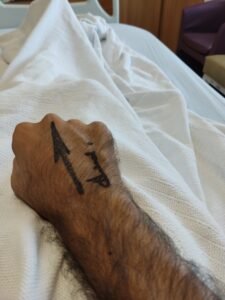
Waking Up in the ICU
The ICU was both reassuring and intimidating. I knew I was surrounded by experienced professionals, yet I also understood that I had entered one of the most vulnerable periods of my transplant journey.
The anesthesia gradually wore off over several hours. As my awareness returned, so did the reality of the operation. The transplanted kidney was already functioning, but my body still carried the physical impact of major abdominal surgery. Every movement reminded me that healing would take time.
What surprised me most was not the pain itself but the overwhelming feeling of dependence. During those first hours, nearly everything required assistance. Standing, changing position, drinking water, and even adjusting the bedsheet became tasks I could not accomplish independently. For someone used to managing his own responsibilities, accepting that temporary dependence was emotionally challenging.
Pain, Sleep, and Constant Monitoring
Pain remained a constant companion during those early days. It was not always severe, but it influenced every movement, every breath, and every attempt to find a comfortable position. Sitting upright required planning, turning in bed demanded patience, and even coughing felt like a significant effort.
Sleep was equally difficult. Hospital environments are designed for patient safety rather than uninterrupted rest. Every few hours, someone entered the room to check vital signs, administer medications, collect blood samples, or assess my progress. While those interruptions often felt exhausting, they were also reassuring because they reflected the level of attention required during the earliest stage of recovery.
The second night introduced an unexpected lesson.
A nurse suggested tea, hoping it might help me relax. Normally I avoid caffeine in the evening, but I trusted the recommendation without thinking much about it. Instead of making me sleepy, it had the opposite effect. I spent much of the night shifting from one position to another, unable to settle comfortably. Later, the nurse immediately recognized what had happened and smiled before I even explained. It was a small moment, but one that reminded me how meaningful human understanding can be in an otherwise highly clinical environment.
Why Breathing Exercises Matter
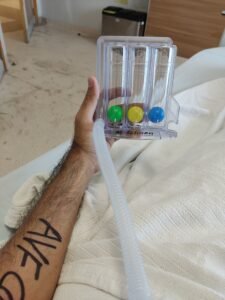
Among all the instructions I received after surgery, breathing exercises initially seemed the least important. In reality, they were among the most valuable.
Every few hours I was asked to perform deep breathing exercises using a respiratory device. At the time, it felt like one more difficult task added to an already exhausting day. Taking deep breaths stretched the surgical area and caused discomfort, making it tempting to avoid the exercise altogether.
Later, I learned why the transplant team insisted on it. After major abdominal surgery, patients naturally take shallow breaths because of pain. Without regular deep breathing, mucus can accumulate in the lungs, increasing the risk of complications such as atelectasis or postoperative chest infections. Those simple exercises helped protect my lungs while the rest of my body recovered.
Looking back, I am grateful that the nurses encouraged me to continue, even when I wanted to stop. Some parts of recovery do not feel important in the moment, yet they quietly prevent problems you may never realize you avoided.
The First Walk After Kidney Transplant
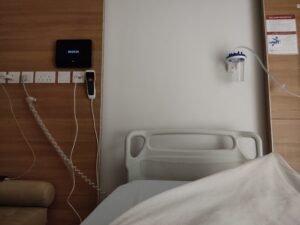
The first time I stood after surgery was carefully planned rather than spontaneous. A nurse and another member of the transplant team supported me from both sides, reminding me to move slowly and let my body adjust. Something as ordinary as standing suddenly felt like an entirely new skill.
My legs felt weak, my abdomen was heavy, and every small movement reminded me that I had just undergone major surgery. Walking only a short distance along the ICU corridor required concentration and determination. It was physically demanding, yet emotionally uplifting because it represented the first real step toward independence.
As we moved through the corridor, I glanced into other rooms where other transplant and surgical patients were beginning their own recoveries. We never exchanged words, but there was an unspoken understanding that each of us was facing uncertainty while hoping for the same outcome. That brief walk made me realize I was no longer simply recovering from surgery—I had become an active participant in my own recovery.
Looking back, that short walk was one of the most meaningful milestones of the entire hospital stay. It was not impressive in distance, but it marked the moment when recovery changed from something happening to me into something I was helping achieve.
Medications and Monitoring During Early Recovery
One of the biggest realizations after transplant is that surgery is not the end of treatment. It marks the beginning of a lifelong medication routine designed to protect the transplanted kidney.
When I first received my immunosuppressants, the responsibility felt enormous. I quickly learned that medication timing mattered just as much as the medicines themselves. At the same time, infection prevention became more important because my immune system was intentionally suppressed. Hand hygiene became more deliberate, crowded environments required more thought, and symptoms that I might once have ignored deserved greater attention.
I discuss these subjects in much greater detail in Kidney Transplant Medications: My Daily Reality and What to Expect and Living with Immunosuppressants: A New Normal for Kidney Transplant Recipients.
The Emotional Side of Early Recovery
The physical recovery after transplant is visible. The emotional recovery is much harder to recognize, yet it can be just as significant.
Most people expect transplant recipients to feel only happiness and relief. Those emotions are certainly present, but they rarely exist alone. During my recovery, gratitude was accompanied by guilt, uncertainty, and a quiet fear that I had not anticipated before surgery.
One memory has stayed with me more vividly than almost anything else. Before we were taken into separate operating rooms, my brother looked at me and immediately sensed the fear on my face. Instead of focusing on his own upcoming surgery, he reassured me with remarkable calmness. Looking back, I still find that moment deeply moving because the person making a tremendous sacrifice for me became the one offering comfort.
After surgery, another emotion gradually appeared. Every blood test seemed incredibly important, especially my creatinine level. I found myself waiting for each laboratory result with a level of anticipation that would have surprised me before transplant. Those numbers were no longer just laboratory values—they represented reassurance that my new kidney was continuing to function well.
As the weeks passed and my results remained stable, my confidence slowly grew. The anxiety never disappeared completely, but it became more manageable because I learned to trust patterns instead of reacting to every individual result. That shift made recovery feel less overwhelming and helped me focus on building sustainable routines instead of chasing perfect numbers.
This emotional adjustment deserves as much attention as physical healing, which is why I discuss it more fully in Mental Health After Kidney Transplant: The Hidden Recovery.
Food, Water, and Daily Life After Transplant
One of the unexpected pleasures after transplant was rediscovering ordinary things that kidney disease had turned into daily challenges.
In my case, my nephrologist encouraged me to drink three to four liters of water each day. During advanced kidney disease and dialysis, fluid restrictions had shaped many of my daily decisions. Suddenly, hydration became something I had to manage differently. Fluid requirements vary between transplant recipients, so I followed my transplant team’s advice rather than treating my intake as a general target.
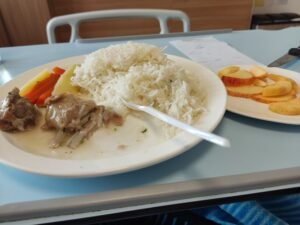
Food brought a similar sense of freedom. Being able to enjoy fruits, vegetables, and other foods with fewer restrictions felt liberating, but I quickly realized that freedom did not mean abandoning discipline. My first proper meal after surgery—a simple plate of white rice, mutton, salad, and fruit—remains surprisingly memorable. After everything that had happened, it represented a gradual return toward normal life.
I explain these practical adjustments in greater detail in Nutrition After Kidney Transplant: Eating to Protect Your Graft for the Long Term and Why Hydration Matters After Kidney Transplant.
Going Home: Where Real Recovery Begins
Leaving the hospital felt like a major achievement, but I soon realized it also marked the beginning of a different phase of recovery.
Inside the hospital, every aspect of my care had been carefully managed by the transplant team. Medications arrived on schedule, nurses monitored my progress continuously, and doctors were always nearby. At home, much of that responsibility shifted to me and my family.
Walking through my front door was emotional. The surroundings were familiar, yet I felt like a different person. My body was weaker, my daily routine had completely changed, and every decision—from taking medications to drinking enough water—carried greater significance than before.
One moment remains especially clear in my memory. My family welcomed me home with smiles, and I smiled back, but I quickly realized how physically difficult even that simple expression felt. It reminded me how much chronic kidney disease and major surgery had affected me, often in ways I had not fully appreciated until recovery began.
Home recovery required structure rather than perfection. Medication timing became non-negotiable, hydration became intentional, and follow-up appointments became an essential part of protecting the transplant. Gradually, those responsibilities stopped feeling overwhelming and started becoming normal parts of everyday life.
For the broader picture of what happens after these first weeks, including Months 1–3, Months 3–6, and beyond, see Kidney Transplant Recovery Timeline: What Really Happens Week by Week.
Follow-Up Visits in the First Weeks
During the first few weeks after transplant, my schedule revolved around hospital follow-up visits, usually twice each week. Although the frequent travel and blood tests were tiring, I understood they served a purpose far greater than simple routine.
Each appointment allowed the transplant team to assess kidney function, review laboratory trends, adjust medication doses, and identify potential complications before they became serious. Many of these adjustments were small, but together they played an important role in achieving long-term stability.
My perspective gradually changed as recovery progressed. During dialysis, hospital visits had been essential for survival. After transplant, those same visits became investments in protecting the future of my transplanted kidney. That difference completely changed how I viewed them.
As my kidney function remained stable and my immunosuppressant levels became more predictable, the appointments gradually became less frequent. Those longer intervals between visits quietly marked another important milestone—evidence that recovery was moving in the right direction.
I discuss the purpose of longer-term transplant monitoring in Hospital Follow-Ups After Kidney Transplant: Why They Matter More Than You Realize in the First Months.
What Surprised Me Most During the First Week
Looking back, the biggest surprise was not the pain or the medications. I had expected those. What I had not expected was how many small, ordinary moments would become meaningful milestones.
Standing without assistance, taking a slightly longer walk, sleeping a little better, enjoying my first proper meal, or seeing another stable creatinine result all brought quiet reassurance. None of these moments seemed dramatic on their own, yet together they showed that recovery was moving forward.
I also underestimated how much recovery depended on patience. Before transplant, I imagined progress would be obvious from one day to the next. Instead, it became visible only when I compared one week with the previous one. That taught me an important lesson I still remember today: recovery is usually measured in trends rather than isolated moments.
Those early experiences shaped the way I approach transplant life even now. They reminded me that protecting a transplanted kidney is not built on extraordinary actions but on consistently doing ordinary things well.
When to Seek Medical Advice
One lesson I learned after transplant is that it is always safer to ask early than to ignore a symptom. Not every change signals a serious problem, but transplant recipients should never hesitate to contact their transplant team if something feels unusual.
Seek medical advice promptly if you develop:
- Fever or chills
- Reduced urine output
- Persistent vomiting or inability to keep medications down
- Increasing redness, swelling, or discharge around the incision
- Pain over the transplanted kidney
- Shortness of breath, chest pain, or sudden swelling
- Severe weakness, confusion, or any symptom that feels significantly different from your normal recovery
Early communication helps your transplant team identify problems before they become serious.
Frequently Asked Questions
What should I expect during the first week after a kidney transplant?
The first week usually involves recovery from major surgery, pain management, frequent monitoring, medication adjustments, gradual movement, and learning how the new kidney is functioning. My own first week involved much more fatigue and dependence than I had expected.
How painful is kidney transplant recovery?
Pain varies between patients. I experienced significant abdominal discomfort after surgery, especially with movement, coughing, and changing position. Pain generally became more manageable as the days passed.
How long do you stay in hospital after a kidney transplant?
Hospital stay varies between patients and transplant centers. NHS Blood and Transplant notes that some patients may leave after a few days while others stay a week or longer, depending on recovery and circumstances.
When can you walk after a kidney transplant?
Patients are generally encouraged to begin moving and walking early when their medical condition allows. My first walk was short and heavily supported, but it became one of the most meaningful early milestones of my recovery.
Is fatigue normal during the first weeks after kidney transplant?
Fatigue can remain significant during early recovery. Major surgery, interrupted sleep, medications, reduced activity, and the emotional adjustment to transplantation can all contribute.
When does recovery start feeling easier?
For me, improvement came gradually rather than on a particular day. The first weeks were dominated by surgery and monitoring; afterward, daily routines slowly became easier and more familiar.
Final Thoughts: The First Weeks After My Transplant
When I look back on those first weeks after surgery, I remember far more than pain. I remember my family’s support, my brother’s extraordinary gift, and the gradual return of confidence with every stable follow-up.
The transplant changed my life in one operation, but learning to live with that gift took much longer.
If you are in the early weeks after your own transplant, remember that every journey is different. Avoid comparing yourself with others. Focus on consistent progress, stay connected with your transplant team, and give yourself the patience that recovery deserves.
Looking back, the first weeks taught me that recovery is built through small milestones rather than one dramatic turning point. The pain gradually became manageable, walking became easier, medications became routine, and each stable follow-up gave me a little more confidence. The surgery gave me a new kidney, but those first weeks taught me how to begin living with it.
About the Author
Dr. Salman (DVM, M.Phil.) is a veterinarian and a living-donor kidney transplant recipient since August 2023. Through RenalRenewal.com, he combines firsthand patient experience with healthcare knowledge to help kidney transplant recipients, CKD patients, dialysis patients, and caregivers better understand life before and after transplantation. His writing clearly distinguishes personal experience from professional medical advice.
Medical Disclaimer
The content on RenalRenewal.com reflects the author’s personal experience together with general educational information. It is not intended to replace individualized medical advice, diagnosis, or treatment.
The author is a veterinarian (DVM, M.Phil.), not a physician for human healthcare. Always consult your transplant team, nephrologist, or other qualified healthcare professional regarding your own medical care.